
There is a strange kind of pride in telling this story. A few years back, a skilled home health provider here in Yuma sat at the edge of a plateau. Advantage Health had solid clinicians, steady referrals, and a reputation for caring, yet they struggled to stand out. Their materials did the job, but only in the most functional sense. The logo looked like stock art. Folders used black-and-white stickers instead of real marks of identity. Nothing felt deliberate or confident, and when nothing looks deliberate, people assume the underlying operation is ordinary too.
In 2015, a new marketing lead stepped in with a clear aim. He wanted a brand that earned trust at a glance and kept earning it at every touchpoint. He asked us to rebuild the visual identity and to align it with a voice that sounded like the way they actually delivered care: capable, optimistic, and respectful of people’s dignity. That direction guided everything that followed.
We explored concepts that favored clarity over ornament and landed on a wordmark anchored by a check mark that formed the V in Advantage. The tagline said, “It’s the patient’s choice.” It was not a slogan for flair. It was a promise made visible, a small symbol of choice that acknowledged how home health decisions are ultimately made. Patients and families weigh options. Physicians and discharge planners present those options. Advantage wanted to be the one that felt like the right call, not only because of outcomes, but because the brand signaled reliability before a word was spoken.
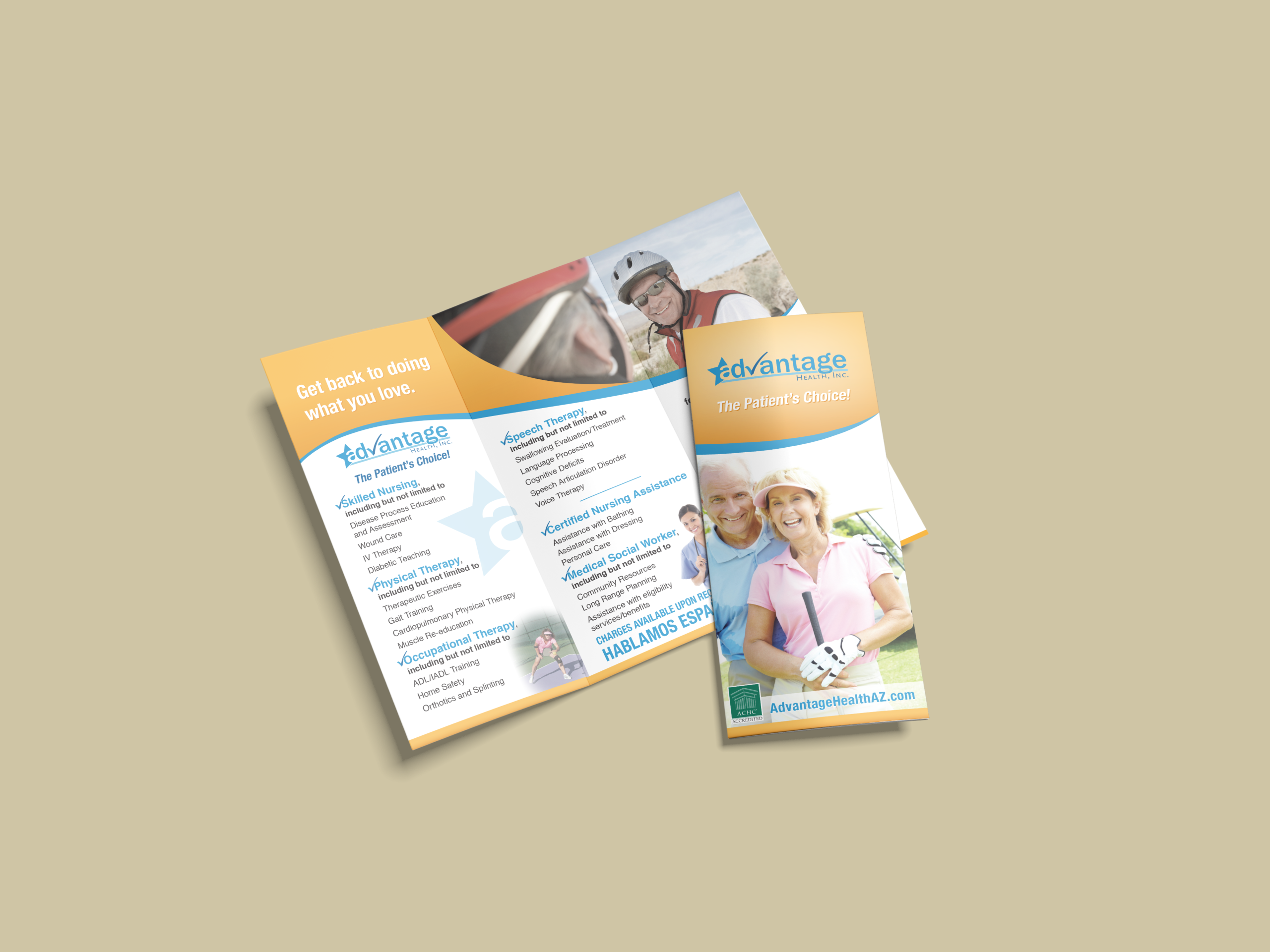
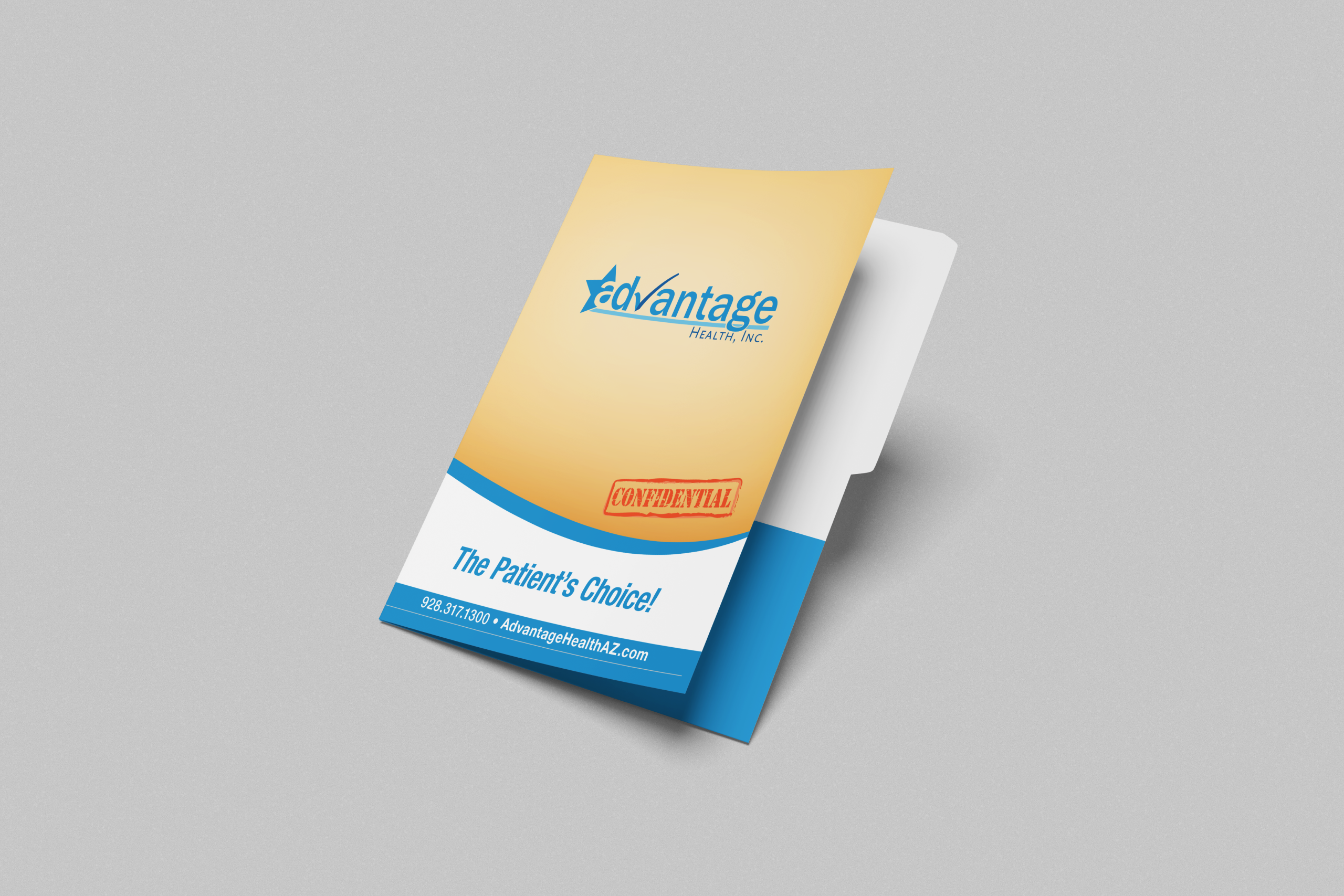
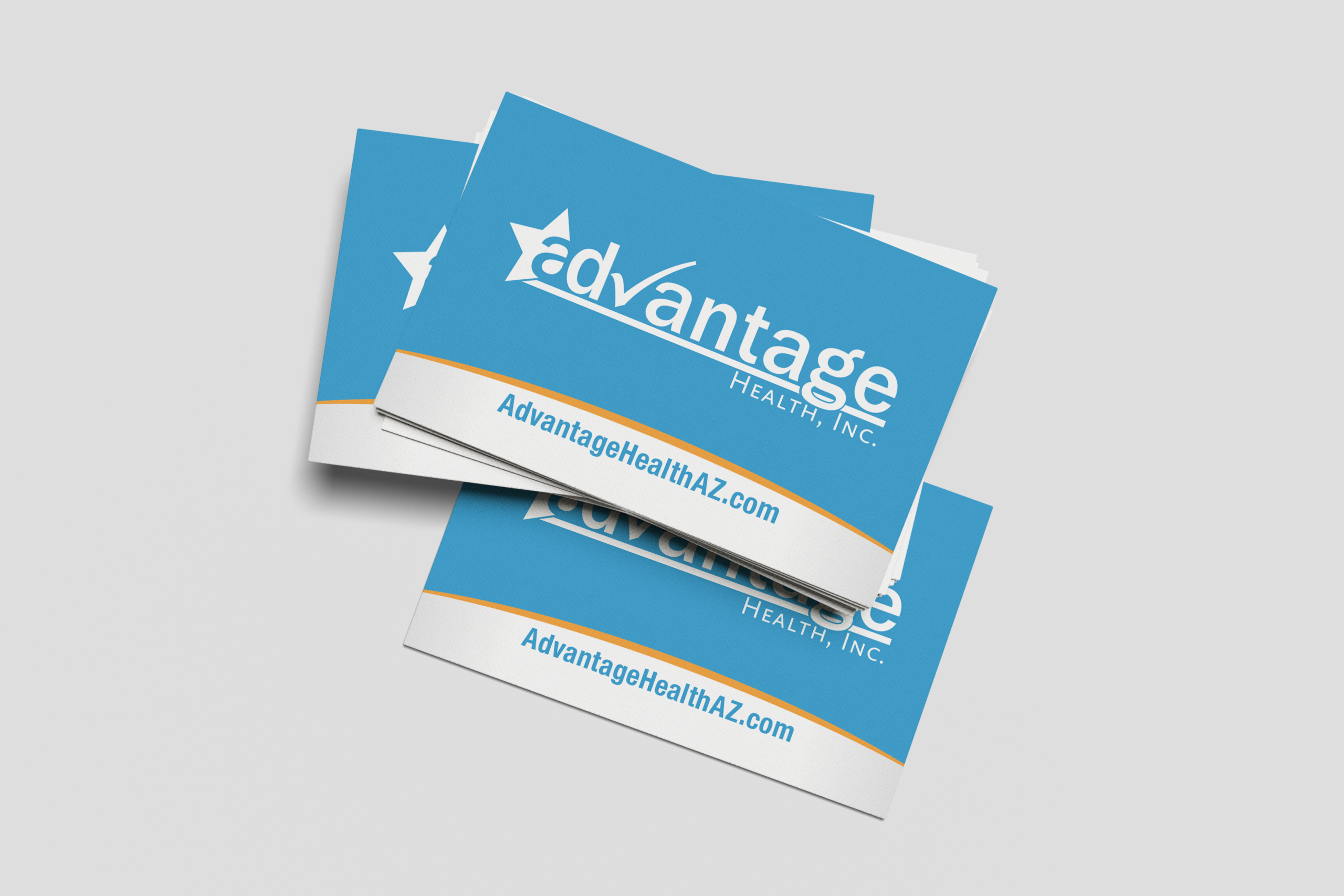
Color did quiet work too. Orange and light blue were deliberate choices to feel warm, trustworthy, and inviting. The folder that patients received moved from a generic container to a safeguard that said confidential, a small but calming signal that private information was being treated with care. Business cards got attention to texture and weight, so a card felt like a tool, not a throwaway. The marketing lead leaned into different creative choices in the field. Instead of photos of injury and recovery, he chose images of older adults who looked active and engaged. It reframed the conversation from convalescence to possibility. Where competitors printed tri-folds on thin paper, he bumped to a light card stock so the piece felt distinct in the hand. On social media, he showed momentum and optimism, not only services.
The details added up. Referring physicians are busy and practical. When they set a patient packet on a table, every impression matters. Is this clear? Is it credible? Will my patient feel safe with this team? When Advantage’s materials began to reflect the quality of the care, conversations got easier. According to team members who were there, doctors started to comment on the cards and folders, and patients began to recognize the brand in a sea of sameness. Referrals grew. So did confidence.
Opportunity followed. As the story was relayed to us, a national provider took interest in the Yuma market. Encompass Health is headquartered in Birmingham, Alabama, and operates the largest network of inpatient rehabilitation hospitals in the United States, caring for patients recovering from strokes, neurological disorders, brain and spinal cord injuries, and more. The marketing lead, not the boss, became the point of contact because he was the connective tissue between Advantage and local physicians. He met with Encompass representatives, listened to what a larger system could offer, and learned they planned to enter the market one way or another.
He did what good operators do. He weighed what a national partner might mean for patients and staff. He lobbied leadership to seriously consider acquisition. Public filings from Encompass Health show that Advantage Health Inc., a Yuma home health provider, was acquired in July 2016. Locally, the transition unfolded across the following years as operations and branding settled under new ownership. Today, Encompass Health and Onvida Health (formerly Yuma Regional Medical Center) jointly operate Yuma Rehabilitation Hospital, a 41-bed freestanding rehab facility that serves residents of Yuma and Imperial counties.
Names change as systems evolve. In 2024, Yuma Regional Medical Center reintroduced itself as Onvida Health to better reflect its role as a growing regional health system. The new name draws on “vida,” meaning life, and signals an emphasis on optimism and community reach.
For our studio, the acquisition ended our direct design work with Advantage. Encompass has its own internal teams and established brand systems, which makes sense at their scale. We did not lose the client in the way that phrase usually stings. We graduated them. A thoughtful local brand helped a capable provider become more visible, more trusted, and more valuable. That visibility contributed to an outcome that benefited patients, staff, and leadership. The former owner moved on to new chapters with well earned rewards. The marketing lead grew into larger roles and, from what we hear, is now on a hospital leadership track. The clinicians kept doing what they do best, now with more infrastructure behind them.
There is a lesson we return to often. Brand is not decoration. It is a system for making promises and keeping them in public. When a brand is aligned with real performance, it becomes a force multiplier. It shortens the distance between quality and recognition. It gives people a reason to say yes. Sometimes, if you do it right, the result is that your client becomes so strong that a larger organization wants to bring them into the fold. In that moment, the work did what it was supposed to do. It created opportunity.
We look back on the Advantage chapter with gratitude. It reminded us that design can change the trajectory of a business, not by being clever for its own sake, but by making the truth easier to see. If you ever find yourself doing work that makes your client irresistible to the right buyer, take the compliment. You did your job.